
by Frances Kraft, Weave’s Community Manager
A few weeks ago, my husband and I were knee-deep in boxes, bubble wrap and rolls of tape in our small Chicago apartment. Jeff was excited about his clever inventory spreadsheets and I was dreaming about exploring our new neighborhood in Washington, DC. About midway through the packing, I was exhausted physically and emotionally and wondering why we ever decided to pack everything we own (including those forgotten boxes in storage) and leave a place we loved.
For the past three years, I had facilitated community circles with a group of a dozen women. Our mission was to build stronger relationships between students, teachers and families, but the surprise bonus was that we had become close friends. In the first months of the pandemic, we met online weekly to share and process our fears, challenges and small wins.
The thought of leaving them was painful. Their plans for a goodbye party felt overwhelming. What my friends gave me, instead, was a going-away gift that helped me let go of Chicago.
Sitting in a circle outside one night as light raindrops threatened to chase us inside, they each told me what I meant to them through memories of how we met or what difficult project we had accomplished together. We had a chance to cry, laugh, and grieve. It wasn’t what I thought I wanted, but it was what I needed.
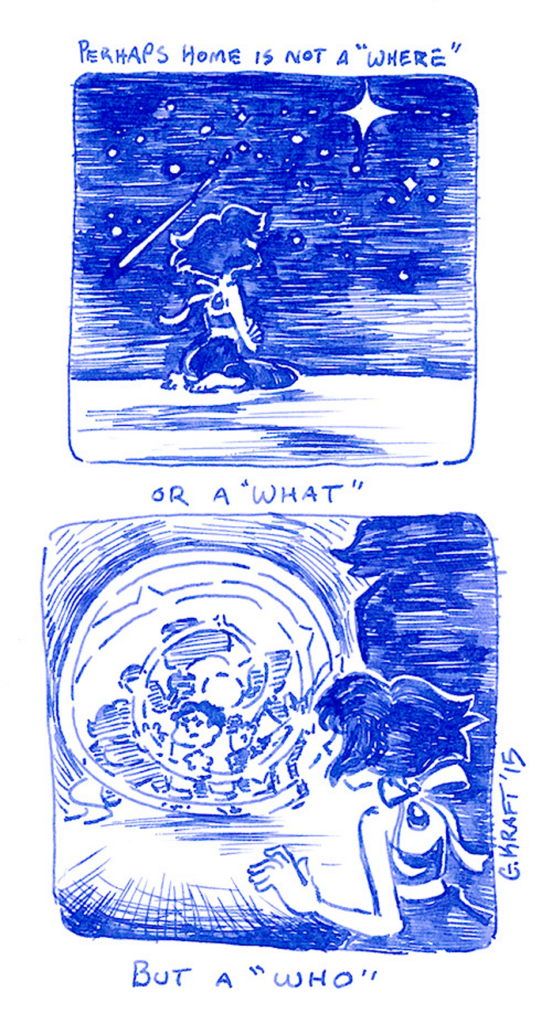
I realized that home isn’t a static place, it is something we create and is always changing. Home may be different for each of us, but for me, it is a place where I feel true belonging, feel valued and feel safe. I can take that with me and extend it to a new place.
As our nation fitfully reopens, “home” may not be the same as before. From schools to cafes, houses of worship to community centers, the structures are intact. Yet the people and the relationships that defined home have changed in subtle and profound ways. In some cases, they no longer include family, friends or neighbors we have lost to Covid.
As I rebuild home in a new place, I’m remembering that it’s OK to not be OK. The continuing pandemic has taught me how to be patient with anxiety, sadness, and unpredictability. It’s also taught me to hold onto love and gratitude for others and my blessings, even as I remember, with sorrow, those who are no longer here for me.
As I continue to move through a world that has changed, I will nurture the relationships that have sustained me. And I will remind myself that belonging is almost always a two-way street. We rarely receive trust unless we are ready to give it. Even if I’m new, I can make others in my new home feel trusted and welcome in my small, everyday acts of caring.
If you find yourself thinking about the meaning of home or about the changes in your community, please share your story in the comments below. We would love to hear from you.
Editor’s note: This post first appeared in Weave’s newsletter, which offers resources, events and reflections that support those of us who are weaving our communities together.